






THE ENGLISH Lab
What was the English Lab bred to do, and how does that behavior express itself in the modern home?
Bred to be retrievers on fishing boats by jumping in the water
Driven to be explosively athletic in short bursts
EASY TO TRAIN & INTERESTED IN WORKING WITH HUMANS
Good Companions, Play Fetch, Enjoy Water, Rest Quietly
BREED HISTORY
Our goal is to to deliver a puppy to you that has an excellent start in training.
INHERENT TRAITS
English Labradors were originally bred to be retrievers on fishing boats. They were bred to have a stunted predatory sequence. The standard predatory sequence is: orient, eye, stalk, chase, grab-bite, kill-bite, dissect, consume. In the English Labrador, kill-bite, dissect, and consume were selected against, producing dogs that would carry a net without consuming its contents.
VERY TRAINABLE
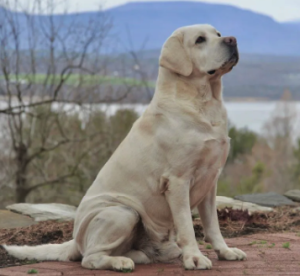
The typical English Labrador is generally easy to train and is interested in working closely with her humans. She understands the relationship between pleasing people and having her needs met, so she is interested in being around people and she tolerates their quirks charitably. She flexibly accepts the instructions of many people, making her a wonderful dog for families and in workplaces. She does not guard her toys or food; on the contrary, her working history as a retriever teaches her to release objects easily.

SKILL DEVELOPMENT
English Labs retrieved fishing nets, waterfowl, fallen tools, and even overboard fishermen from the water, and therefore were needed to be explosively athletic in short bursts. They initially lived in the fishing colonies of Newfoundland with a changing cast of workers from season to season, so they learned to trust humans easily and work flexibly with whoever was around. In the winters, their role was therapeutic in addition to their manual labor; they provided much-needed companionship to workers through the frigid, dark winters.
MODERATE ENERGY LEVEL
She can show beautiful athletic talent in short bursts but she is not tireless. She plays traditional dog games like “fetch” and she enjoys the water. However, she never strays too far from her trusted humans. Between exercise sessions, she rests quietly and waits for the next adventure. She fits nicely into the role of “companion animal” that we prize today.
PREDICTABLE CHALLENGES
Given the English Labrador’s selection history, there are a few undesirable behaviors that we can anticipate:
ENGLISH LABS LOVE TO CARRY THINGS IN THEIR MOUTHS.
Without training, this will predictably lead to them “steal” and chew or eat shoes, clothing items, food from the counter top, etc.
English labs adore people and are easily reinforced by our attention.
If not managed carefully, this can lead to pulling on leash toward strangers and jumping on people.
English labs are outdoorsy dogs with a modest but un-ignorable appetite for exercise.
If not exercised adequately, they can have a hard time settling down.
DEVELOPMENTAL STAGES
All dogs predictably go through multiple developmental stages in the first year of life. The dog’s environment and treatment during these stages will shape their temperament for years to come. Careful management in the early months can increase the chances that the puppy glides through these difficult developmental stages easily and emerges as a happy, behaviorally healthy adult dog.
5-15 Weeks
CRITICAL SOCIALIZATION WINDOW
During this period, puppies learn what is “safe” and “normal” in their environment and what is not. Puppies who are not adequately socialized during this period may become fearful of unfamiliar things (this is especially a concern for puppies living in cities, doing public service work, etc.)
10 Weeks
BATHROOM SOLIDIFICATION
Ethologists have found that the 10 week mark is when the puppy generally develops a preference for where to use the bathroom. Puppies that are kept primarily indoors or are not taken outside very frequently may develop a preference for using the bathroom indoors.
4-6 Months
TEETH SHEDDING
During this period, the puppy’s baby teeth are pushed out of their mouth by their descending adult teeth. They become extremely “mouthy” – they want to bite and hold onto anything, especially human hands and arms.